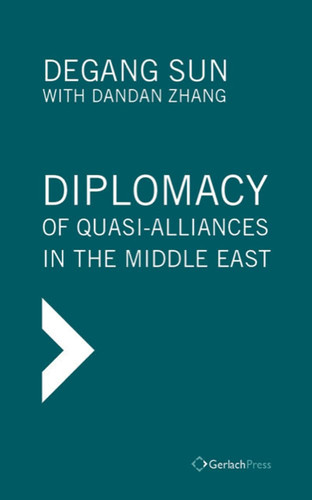
Quasi-alliance refers to the ideation, mechanism and behavior of policy-makers to carry out security cooperation through informal political and security arrangements. As a "gray zone" between alliance and neutrality, quasi-alliance is a hidden national security statecraft. Policy-makers tend to seek a third way to strengthen security cooperation and meanwhile avert the risk of conflict. Based on declassified archives and secondary sources, this book probes the theory and practice of quasi-alliances in the Middle East. Five cases are chosen to test the hypotheses of quasi-alliance formation, management, efficacy and termination, including Anglo-French-Israeli quasi-alliance during the Suez Canal War of 1956; US-Saudi quasi-alliance during the Johnson administration; Soviet-Egypt quasi-alliance during the Sadat administration; and Iran-Syria quasi-alliance since 1979. The research finds that alliance is a hard balancing based on legally binding treaties, while quasi-alliance is a soft balance based on politically binding agreement. The task-oriented quasi-alliance features diversity of functions, flexibility of cooperative means, intangibility of targeting, and limitation of sovereignty transfer.
| ISBN-13: | 9783959940740 |
| ISBN-10: | 3959940742 |
| Publisher: | Gerlach Press |
| Publication date: | 2020 |
| Pages: | 325 |
| Product dimensions: | Height: 9.5 Inches, Length: 6.3 Inches, Weight: 1.5 Pounds, Width: 1 Inches |
| Author: | Degang Sun, Dandan Zhang |
| Language: | en |
| Binding: | Hardcover |
Discover more books in the same category



