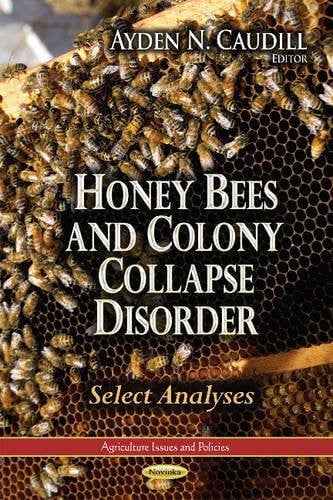
Starting in late 2006, commercial migratory bee-keepers along the East Coast of the United States began reporting sharp declines in their honey bee colonies. Because of the severity and unusual circumstances of these colony declines, scientists named this phenomenon colony collapse disorder (CCD). Reports indicate that bee-keepers in most states have been affected. Overall, the number of managed honey bee colonies dropped an estimated 35.8% and 31.8% in the winters of 20062008, and 28.6% in 2009. To date, the precise reasons for colony losses are not yet known. Honey bees are the most economically valuable pollinators of agricultural crops world-wide. Scientists at universities and the USDA frequently assert that bee pollination is involved in about one-third of the U.S. diet, and contributes to the production of a wide range of fruits, vegetables, tree nuts, forage crops, some field crops, and other specialty crops. The monetary value of honey bees as commercial pollinators in the U.S. is estimated at $1520 billion annually. This book provides an overview of the importance of honey bee pollination to U.S. agricultural production and the extent and symptoms of CCD and how it differs from previous honey bee colony losses.Also discussed are the policy options and actions that Congress has taken to address this issues.
| ISBN-13: | 9781628082869 |
| ISBN-10: | 1628082860 |
| Publisher: | Nova Science Publishers, Incorporated |
| Publication date: | 2013 |
| Pages: | 100 |
| Product dimensions: | Height: 9 Inches, Length: 6.25 Inches, Weight: 0.40565056208 Pounds, Width: 0.25 Inches |
| Author: | Ayden N. Caudill |
| Language: | en |
| Binding: | Paperback |
Discover more books in the same category



