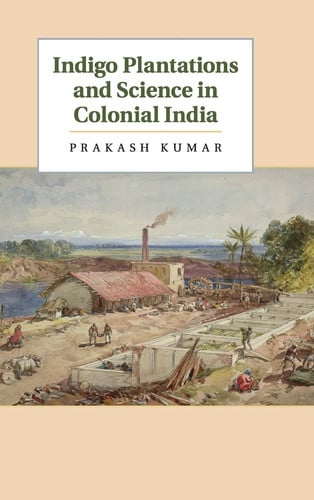
Prakash Kumar documents the history of agricultural indigo, exploring the effects of nineteenth-century globalization on a colonial industry in South Asia. Kumar discusses how the knowledge of indigo culture thrived among peasant traditions on the Indian subcontinent in the early modern period. Caribbean planters and French naturalists then developed and codified this knowledge into widely disseminated texts. European planters who began to settle in Bengal with the establishment of British rule in the third quarter of the eighteenth century drew on this network of information. Through the nineteenth century, indigo culture in Bengal became more modern, science-based, and expert driven. When a cheaper and purer synthetic indigo was created in 1897, the planters and the colonial state established laboratories to find ways to cheapen the cost of the agricultural dye and improve its purity. This indigo science crossed paths with the colonial state's effort to develop a science for agricultural development. For two decades, natural indigo survived the competition of the industrial substitute. The indigo industry's optimism faded only at the end of the First World War, when German proprietary knowledge of synthetic indigo became widely available and the industrial use of synthetic indigo for textile dyeing and printing became almost universal.
| ISBN-13: | 9781107023253 |
| ISBN-10: | 1107023254 |
| Publisher: | Cambridge University Press |
| Publication date: | 2012-08-27 |
| Pages: | 334 |
| Product dimensions: | Height: 9 Inches, Length: 6 Inches, Weight: 1.3889122506 Pounds, Width: 0.94 Inches |
| Author: | Prakash Kumar |
| Language: | en |
| Binding: | Hardcover |
Discover more books in the same category



